Operations Is the Strategy: What The 2026 ALA Conference & Expo Made Impossible to Ignore

April was a sprint. ALA Annual Conference rolled straight into our Actionstep Global Sales Kickoff in San Francisco. Great conversations, great energy, and more importantly, alignment. What we’re hearing in the market showed up loud and clear at ALA.
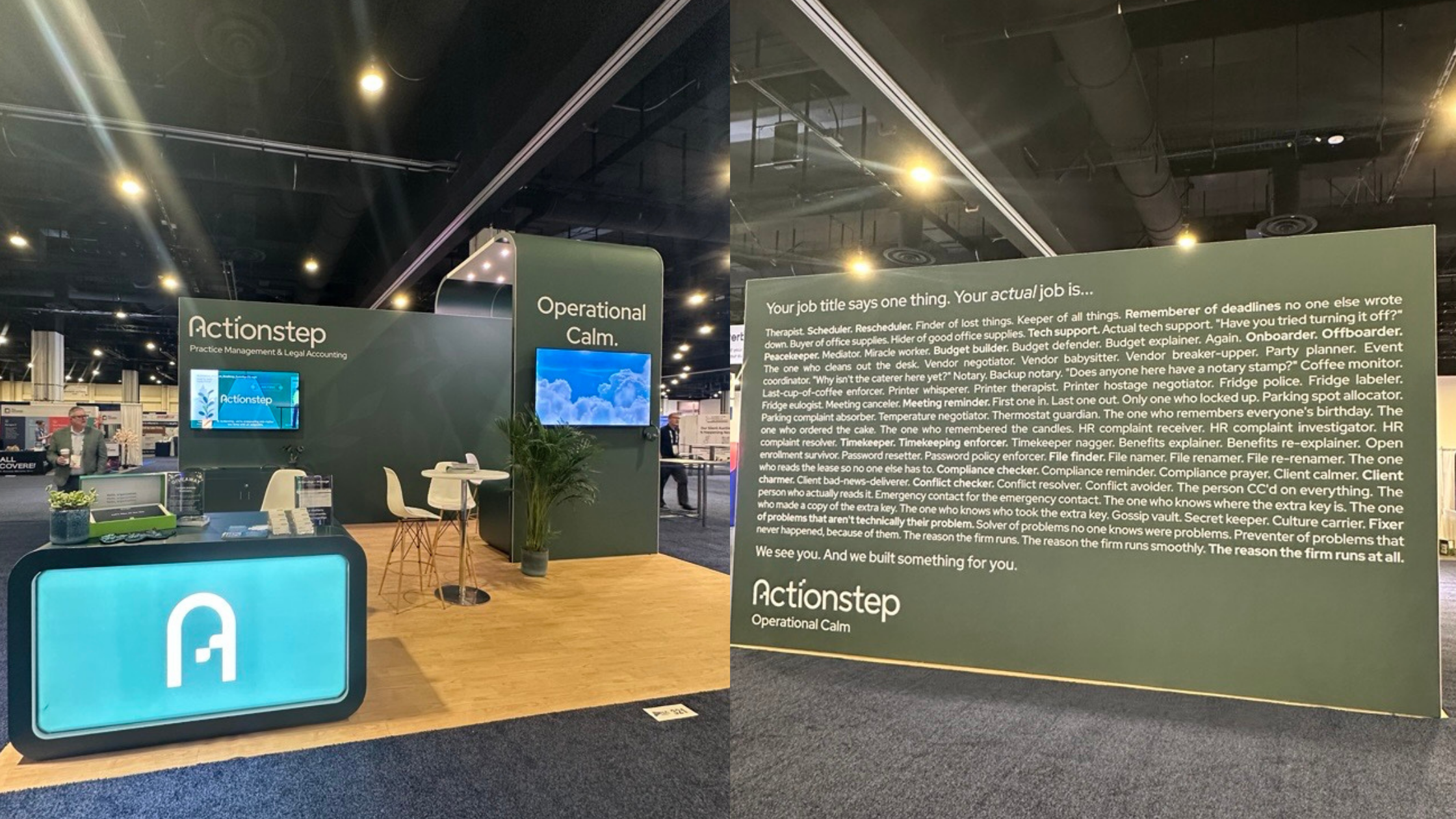
The firms that grow treat operations as strategy.
That was the through line this year. It showed up everywhere—client experience, succession planning, burnout, AI, attorney-administrator partnerships. Different topics, same conclusion.
We know what needs to be done. The question is why more firms aren’t doing it.
Here’s what stuck with me.
Operations is the product.
Clients aren’t judging your legal work, they assume it’s good. They’re judging how easy you are to work with. Responsiveness. Communication. Whether they have to repeat themselves. Whether anything actually closes the loop.
The firms winning on client experience aren’t practicing better law. They’re designing better experiences. That’s operations.
Growth doesn’t come from better lawyers. It comes from better systems.
One story said it all. A firm that scaled from $2M to $10M didn’t do it through talent upgrades. They did it by building operational infrastructure and treating admin leadership as strategic.
That’s not a one-off. That’s a pattern.
If your people are the system, you don’t have a system.
This one hit hard.
Too many firms rely on a handful of high performers who “just know how things work.” That’s not strength, that’s risk. When they leave, everything wobbles.
Processes in people’s heads aren’t processes. They’re liabilities.
SOPs aren’t busywork. They’re continuity.
Clarity is a leadership responsibility.
A lot of burnout comes down to one thing: people don’t know what success looks like.
Internally, that creates second-guessing and overwork. Externally, it creates friction. Clients unsure what’s happening, who to call, or why something looks the way it does.
The fix isn’t more tech or more people. It’s clarity. Defined roles. Clear expectations. Consistent communication.
Simple. Rarely done well.
The execution gap is the only gap that matters.
No firm I talked to is lacking ideas. They know where they’re inefficient. They know what needs fixing.
They just don’t follow through.
The firms that move forward aren’t trying to overhaul everything. They pick a few things that matter, commit to them, and execute.
That’s it.
People feel your operations. So do clients.
You don’t need an engagement survey to know when something’s off. People know when they’re unsupported. Clients know when they’re not a priority.
Operational decisions such as how work is structured, how communication flows, how roles are defined drive culture more than anything you say.
The firms that get this right don’t separate “people” from “operations.” They understand they’re the same thing.
AI won’t fix bad operations. It will amplify them.
The AI conversations were refreshingly grounded.
AI is not a shortcut. It’s an accelerant.
If your data is messy, your workflows unclear, and your systems disconnected AI just helps you move faster in the wrong direction.
The firms getting value from AI already have a solid operational foundation. They’re layering it in thoughtfully, not hoping it saves them.
Bottom line
Nothing we heard at ALA was new. But hearing the same message from every angle makes it harder to ignore.
Operations isn’t support. It’s the strategy.
The firms that act on that will pull ahead. The ones that don’t will keep talking about it.
ABOUT BETH THOMPSON
Beth Thompson is VP of Market Strategy & Legal Evangelism, with a career spent at the intersection of law firm operations, technology, and growth. She works closely with mid-market firms navigating the operational challenges that come with scale — and is known for saying the things that firm leaders are thinking but haven’t said out loud yet. She works closely with both ALA and ILTA organizations to share her vast experience over her 30+ year career in legal.